
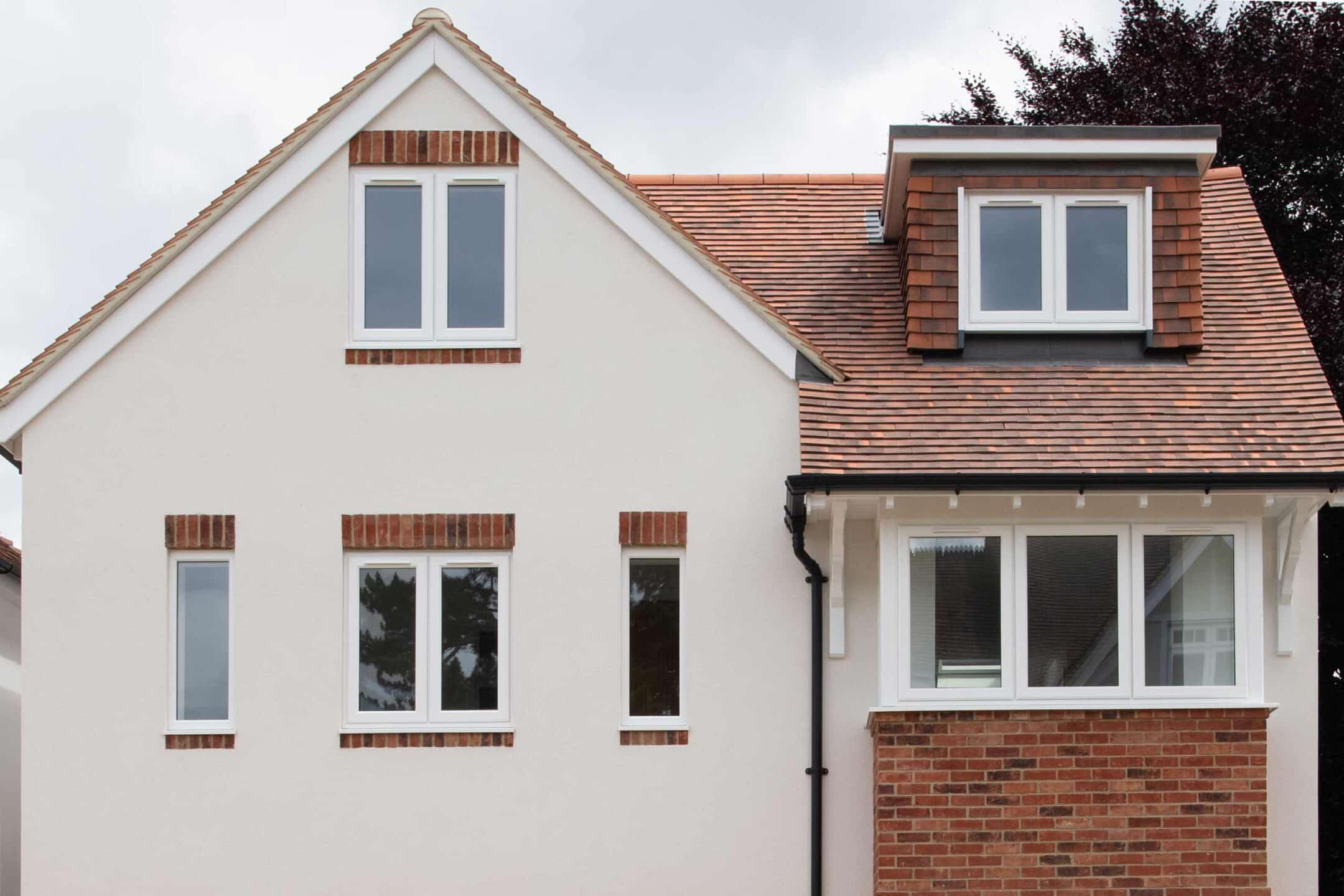
What is K Rend? An Oxford Builder’s Honest Guide
Quick answer
K Rend is a brand of through-coloured external wall render made by Kilwaughter Minerals — not a type of render itself. Its silicone and monocouche systems give a durable, low-maintenance, no-repaint finish, typically costing £60–£110 per square metre applied. Weber and Parex make comparable systems; the applicator matters more than the brand.
(Updated June 2026)
K Rend is a brand of external wall render made by Kilwaughter Minerals in Northern Ireland — not a type of render in itself. The name has become shorthand for rendering in general, the way “Hoover” became shorthand for vacuum cleaners, which is why so many people ask for “K Rend” when what they actually want is a durable, low-maintenance, coloured finish on their walls. Sometimes the right answer is genuinely a K Rend product. Sometimes it’s a comparable system from another manufacturer. This guide explains the difference, what it costs, and what to watch out for.
So what is K Rend, exactly?
Kilwaughter has been producing renders for decades, and the K Rend range spans several quite different products. The common thread is that they’re through-coloured — the pigment runs through the render rather than sitting on top as paint — so the finish doesn’t need repainting every few years. Most are designed to shed water while letting the wall breathe, which matters enormously on older masonry.
You can browse the full range on the manufacturer’s site, but in practice the products fall into a few families:
- Silicone renders — the modern flagship. Silicone water-repellent technology in a breathable, thin-coat or scraped-texture finish. Low maintenance, resistant to algae, and the most commonly specified K Rend products today.
- Monocouche (“one-coat”) renders — a thicker, through-coloured cementitious render, usually machine-applied then scraped to texture. A workhorse on new builds and full re-renders.
- Dash receivers and traditional finishes — for pebble dash and similar finishes, still common on existing housing stock.
K Rend vs other renders — does the brand matter?
Less than people think, and more than the cheapest quote suggests. Weber, Parex and other major manufacturers make silicone and monocouche systems of comparable quality, and a good applicator will often recommend between brands based on the substrate, the exposure and the colour you’re after rather than loyalty to a logo. What matters far more than the badge on the bag is that the system is right — basecoat, beads, mesh and topcoat designed to work together — and that it’s applied by people who do it every week. Our sister company J&H Lynch are approved applicators for K Rend, Weber and Parex, and handle the machine-applied monocouche and silicone work on our projects — so when we specify a render, it’s because it suits the wall, not the marketing.
What does K Rend cost in 2026?
As a guide, supplied-and-applied silicone or monocouche render typically runs £60–£110 per square metre in our area depending on the system, the condition of the substrate and access — so a typical semi-detached house comes out somewhere between £5,000 and £10,000 once scaffolding and preparation are included. Removing failed existing render adds to that; so does extensive crack repair or patching beneath. Thin-coat silicone systems use less material than thick-coat monocouche, but preparation and basecoat work narrow the gap on price.
Common K Rend problems — and what actually causes them
Search “K Rend problems” and you’ll find plenty. In our experience, most of what gets blamed on the product is really application or detailing:
- Cracking — usually movement that wasn’t accommodated: missing or wrongly placed beads and mesh, render bridging different substrates, or a basecoat that wasn’t right. Through-coloured render can’t be invisibly patched, so cracks matter.
- Patchiness and colour variation — typically drying conditions or inconsistent suction across the wall during application. Machine application and proper curing control reduce it dramatically.
- Algae and green staining — shows on any render in shaded, damp elevations. Silicone formulations resist it best; north-facing walls under trees will still need an occasional soft wash.
- Efflorescence — white salt deposits, usually from moisture moving through the wall. The fix is dealing with the moisture source, not the render.
The pattern is consistent: the render system is rarely the weak link — the specification and the applicator are. It’s why “who’s applying it?” is a better question than “which brand is it?”.
K Rend and external wall insulation
K Rend finishes are commonly used as the decorative topcoat on external wall insulation. The crucial point: with EWI, certification belongs to the whole insulated system — boards, fixings, basecoat, mesh and finish tested together — not to the topcoat alone. So if you’re insulating as well as rendering, ask whoever quotes you which certified system they’re installing, not just which render goes on top. J&H Lynch’s EWI service covers this in detail, and their guide to EWI grants is worth reading if funding might apply to you.
Is K Rend right for your house?
If you want a coloured, low-maintenance external finish with a long life and no repainting cycle, a silicone or monocouche render — K Rend or an equivalent — is usually the right family of products. On Oxford’s older solid-wall properties the breathability question comes first: the wrong render on the wrong wall traps moisture, and that’s a far more expensive mistake than choosing between brands. Tell us about the house and we’ll tell you what we’d put on it. Our exterior rendering in Oxford page covers the service, and you can see render and screed working together on a project in our Oxfordshire case notes.
K Rend — FAQs
Is K Rend a brand or a type of render?
A brand — made by Kilwaughter Minerals. Its name is used generically, but Weber, Parex and others make directly comparable silicone and monocouche systems.
How long does K Rend last?
A properly applied, through-coloured render system should give 25–30 years with minimal maintenance — an occasional wash on shaded elevations is the main upkeep.
Can K Rend be painted?
It can, but it defeats the point: the colour runs through the render so it never needs painting. Paint it once and you’ve signed up for a repainting cycle.
Why does K Rend crack?
Almost always application or detailing — missing movement beads, poor basecoat work or render bridging mixed substrates — rather than the product itself. Choosing an experienced, approved applicator is the best prevention.
Thinking about rendering your home? Talk to us on 01865 420063 — we’ll look at the walls and recommend the system that suits them, and the specialist team that will apply it properly.
